Jeffrey Ma
Master Builders Solutions US & Canada
Introduction
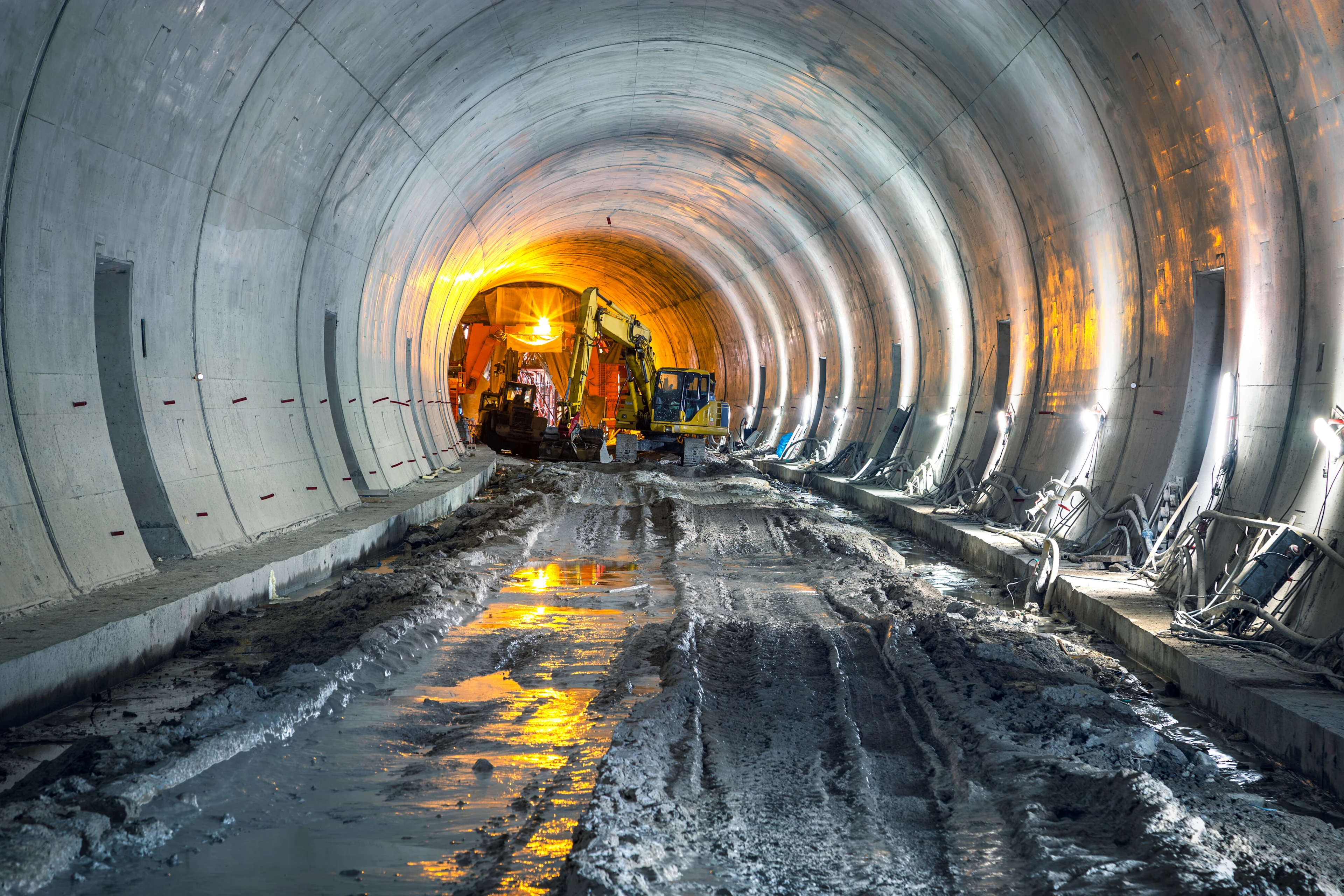
In tunneling, some of the biggest challenges are the ones you cannot see until excavation begins.
Groundwater can find its way through fractures and discontinuities in the rock mass. Variable ground conditions can create instability. Uncontrolled water inflow can slow tunnel advancement, complicate excavation, increase pumping requirements, and create additional risks for the project.
Grouting gives underground construction contractors a way to manage these conditions by treating the ground before they become larger problems, or addressing localized conditions after excavation.
The key is knowing when to grout, where to grout, and which grouting technology fits the ground conditions.
Why Grouting Matters Underground
Grouting is commonly used in tunneling to control groundwater ingress and improve unstable rock or soil conditions by filling cracks, fractures, voids, and other discontinuities.
In underground construction, however, the materials available for injection extend beyond cementitious grout. Depending on the geology, groundwater conditions, opening size, and performance requirements, tunneling applications may also use microfine or ultrafine cement, colloidal silica, acrylic resins, polyurethane resins, and other injection materials.
That range of technologies is important because underground conditions are rarely uniform. A material capable of filling one fracture network may not effectively penetrate another.
Successful grouting starts with understanding the ground.
Pre-Excavation or Post-Excavation Grouting?
Tunnel grouting generally falls into two approaches: pre-excavation grouting and post-excavation grouting.
With pre-excavation grouting, boreholes are drilled from the tunnel face into the rock mass ahead of excavation. Grout is injected through the boreholes to seal fractures and reduce pathways for groundwater before tunnel advancement.
This approach can help:
Control groundwater inflow
Improve rock mass quality
Reduce groundwater drawdown
Limit the potential for settlement around the tunnel
Support more predictable tunnel advancement
Post-excavation grouting occurs after the tunnel has been excavated and is typically used to address remaining water ingress or other localized conditions in excavated or lined areas.
Both approaches have a place in underground construction. However, experience has shown the value of addressing anticipated groundwater problems before excavation whenever practical. Once significant groundwater starts entering an excavated tunnel, controlling it can become considerably more difficult, time-consuming, and costly.
Complete sealing through pre-injection is not always realistic because geology varies throughout the rock mass. Instead, an effective strategy can combine pre-excavation grouting with targeted post-excavation injection to manage remaining water ingress.
The Ground Determines the Grout
There is no single grout for every tunneling condition.
For pre-excavation grouting in rock, cementitious materials are commonly used. Microfine and ultrafine cements provide options where penetration into smaller fractures is required.
Particle size matters because the grout must be able to enter the opening it is intended to fill. As fractures become finer, the maximum particle size and particle-size distribution of the cement become increasingly important to injectability.
In some conditions, even ultrafine cement may not provide the penetration required.
Chemical grouts provide additional options, particularly for water ingress, crack injection, ground stabilization, strata consolidation, and void filling. The Master Builders Solutions MasterRoc portfolio includes acrylic, polyurethane, and polyurea silicate technologies with different viscosities, reaction times, expansion characteristics, flexibility, and cured properties.
The objective is not simply to inject grout. It is to select a material whose properties match the pathway and the performance required underground.
Proven Performance in Challenging Tunnel Conditions
The importance of matching grout technology to actual ground conditions can be seen in major tunneling projects.
During construction of the Hartford CSO Tunnel in Connecticut, more than 1,500 tons of microfine and ultrafine cement were used to help stop water inflows in specific areas.
The Arrowhead tunnel in California presented a different challenge. Extensive use of ultrafine cement encountered conditions where penetration into groundwater pathways was difficult, and grout acceptance varied significantly between boreholes. The project ultimately used more than 1,400 tons of colloidal silica in addition to microfine cement.
During the construction of the Réseau Express Métropolitain (REM) in Montreal, Quebec, 214 metric tons of chemical grout were used for underground water management.
The lesson from these projects extends beyond any individual product: effective tunnel grouting depends on adapting the injection strategy to the geology encountered.
Fracture size, permeability, groundwater pressure, grout acceptance, and other field conditions can change as tunneling progresses. The grouting system needs enough flexibility to respond.
Grout Performance Is More Than Strength
For cementitious grouting, compressive strength is important—but it is only one part of successful performance.
Grout must also be capable of being mixed, pumped, and placed effectively while remaining sufficiently stable to perform after injection. Flowability, pumpability, bleeding, segregation, dimensional stability, and water-cement ratio can all influence field performance.
Better grout performance can also translate into better construction efficiency through improved pumping, reduced material waste, and lower potential for rework.
Plan for the Ground Before Excavation Begins
Grouting is most effective when it is treated as part of the tunneling strategy rather than simply as a reaction to water entering the excavation.
Understanding the expected geology and groundwater conditions allows underground construction contractors, engineers, and specifiers to establish injection criteria, evaluate appropriate materials, and prepare for changing conditions before tunneling reaches a problem area.
Conditions underground will never be completely predictable. But the response to those conditions can be.
From microfine and ultrafine cement to colloidal silica, acrylics, polyurethanes, polyurea silicates, and cementitious grout additives, the MasterRoc portfolio gives underground construction teams multiple technologies for controlling groundwater, improving ground conditions, filling voids, and supporting reliable tunnel advancement.
When the unexpected happens underground, having the right grouting strategy already in place can make all the difference.