Tyler Grissom
Master Builders Solutions US & Canada
Introduction
“The slump is on target, but the concrete still feels sticky.”
It is a familiar complaint for ready-mixed concrete producers and contractors working with manufactured sand. The concrete may meet its specified slump but still discharge slowly, require more pumping effort, resist screeding, or feel difficult to finish.
The reason is that slump measures only part of fresh-concrete behavior.
Fine-aggregate shape, surface texture, gradation, and microfines can significantly affect how concrete moves. A mixture may appear workable during a slump test but behave very differently when it must flow out of a truck, through a pump line, or beneath a screed.
Why Manufactured Sand Changes Concrete Behavior
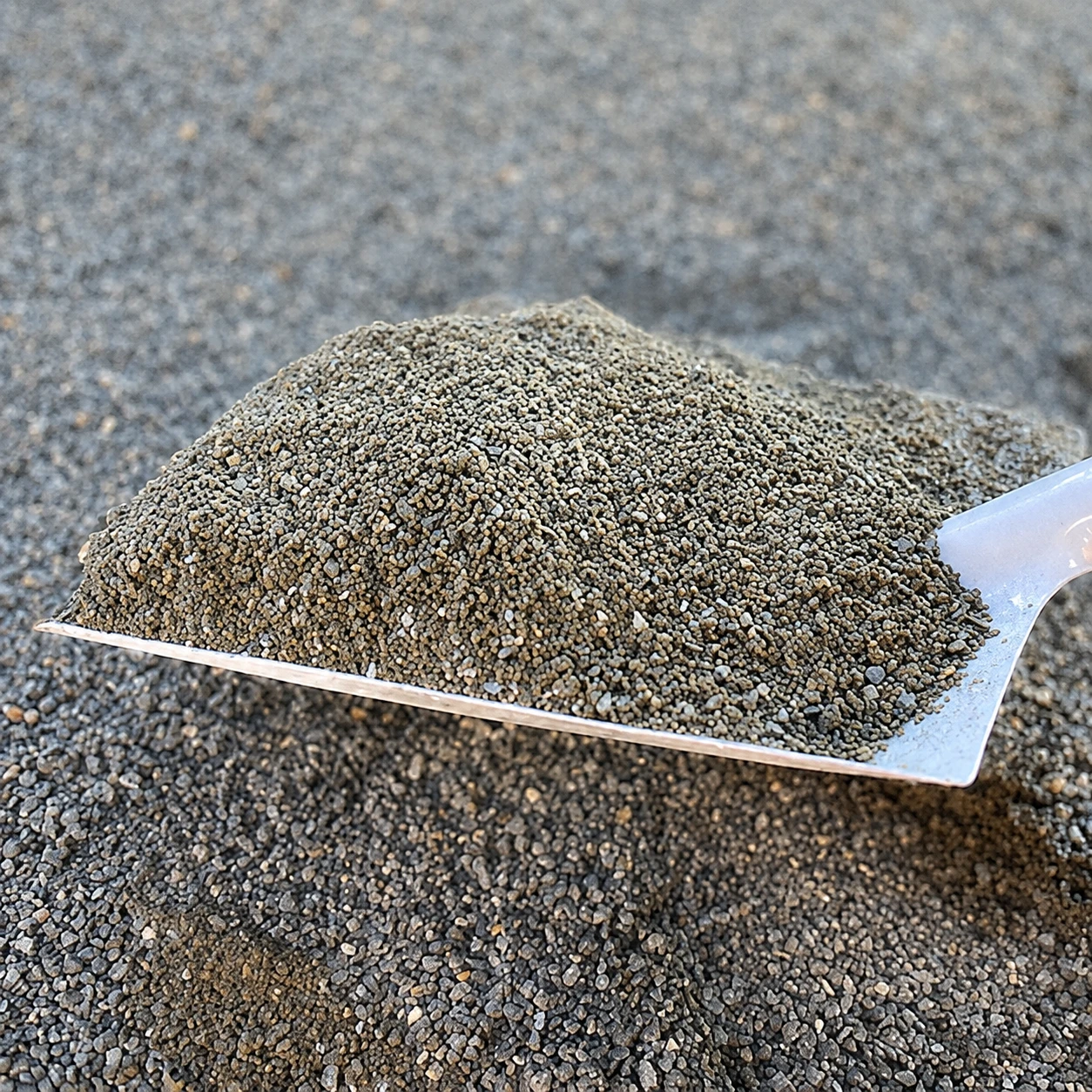
Compared with many natural sands, manufactured-sand particles may be more angular, elongated, or rough-textured. These characteristics do not make the material unsuitable for concrete but it can certainly increase internal resistance within the mixture.
In many regions, manufactured sand is the most practical and locally available fine aggregate.
Angular and rough-textured particles create more particle-to-particle contact and friction which may cause them to interlock as the concrete begins to move. This can generate additional drag once movement is underway.
Gradation and microfines also matter. A well-balanced particle-size distribution can improve packing and help the available paste lubricate the aggregate. An inconsistent gradation or poorly balanced microfines content can increase water, paste, and admixture demand.
High-surface-area or absorptive fines may also reduce the thickness of the lubricating water and paste films between particles. The result can be concrete that meets its slump target but still discharges slowly, requires more pumping effort, creates screeding drag, or becomes difficult to finish.
Same Slump, Different Performance
Two mixtures can have the same slump and still perform very differently.
Yield stress describes the resistance that must be overcome before concrete begins to move. Fine-aggregate angularity and particle interlock can increase this initial resistance.
Plastic viscosity describes the resistance encountered after the concrete is already moving. Rough surfaces, fine-particle interactions, and limited lubrication can increase drag during continued movement.
Since a slump test does not independently measure these properties, a mixture can meet its slump requirement while still being difficult to discharge, pump, place, screed, or finish.
This distinction is important because conventional high-range water reducers (HRWR) are primarily optimized to disperse cement particles and lower yield stress—the effect most readily observed as increased slump. HRWR may have less influence on the resistance encountered after the concrete is already moving.
How MasterEase® 5000 Admixture Contributes to the Solution
MasterEase 5000 is designed to help reduce the plastic viscosity of the paste rather than focusing only on lowering yield stress.
The mechanism acts within the paste phase. More effective dispersion helps break down agglomerates of cement and microfine particles, releasing water that would otherwise be held within those agglomerates. This improves the effectiveness of the lubricating films between particles and reduces internal resistance at a given water content and slump.
The result is paste that can carry the aggregate system more efficiently.
This distinction is particularly important in mixtures containing angular, rough-textured manufactured sand or high-surface-area microfines. These materials can increase particle contact, friction, and drag. By improving paste mobility and lubrication, MasterEase 5000 helps the concrete begin moving more easily and continue moving with less resistance.
In practice, this can support:
More efficient truck discharge
Improved pumpability
Easier placement and consolidation
Reduced screeding effort
Improved finishing behavior
The result is not simply a higher slump number. It is concrete that moves more efficiently throughout the handling process.
Design Around the Sand You Have
Manufactured sand is often the most practical fine aggregate available. The goal is not to avoid it, but to understand its characteristics and design the concrete mixture accordingly.
When concrete meets its slump target but remains difficult to handle, producers should evaluate particle shape, surface texture, gradation, microfines, paste volume, and admixture demand.
The problem may not be insufficient slump. It may be excessive internal friction and inadequate lubrication for the fine-aggregate system being used.
MasterEase 5000 gives producers another tool for managing that resistance and improving concrete movement without relying solely on more water or paste.
Are you working with manufactured sand that meets the specification but still produces difficult-to-handle concrete? Learn how MasterEase 5000 can help or contact your Master Builders Solutions representative.